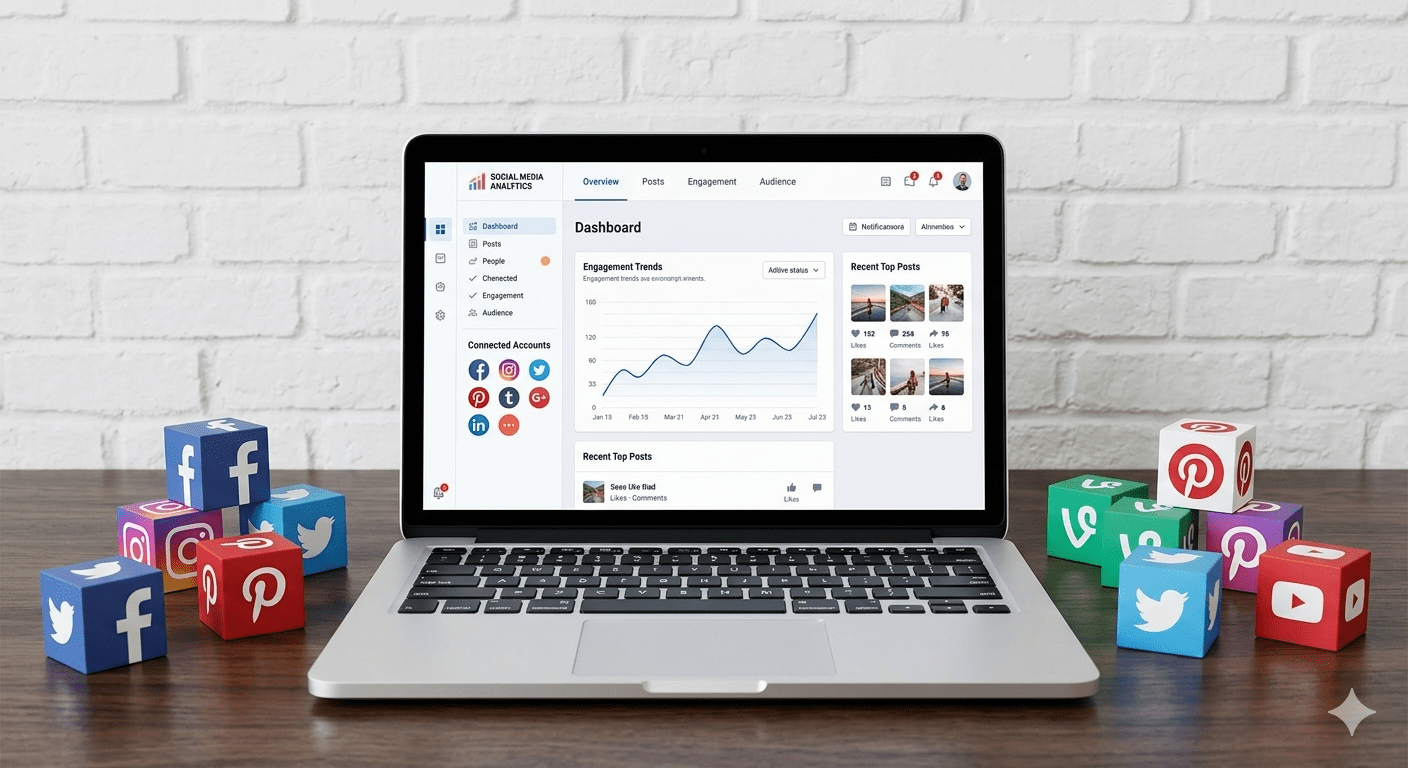
In today’s digital world, almost every business has a social media presence. Platforms like Facebook, Instagram, LinkedIn, and YouTube make it easy to connect with customers and promote products or services.
As a result, many business owners ask:
“Do I really need a website if I already have social media?”
The short answer is yes.
While social media is an excellent marketing tool, it should complement your website—not replace it. In this article, we’ll compare websites and social media and explain why successful businesses use both.
What Is the Difference Between a Website and Social Media?
A website is a digital property that you own and control completely. You decide how it looks, what content is displayed, and how visitors interact with it.
Social media platforms, on the other hand, are third-party services where your business profile exists under their rules and algorithms.
Think of it this way:
- Your website is your business headquarters.
- Social media is a marketing channel that directs people to your headquarters.
Benefits of Having a Website
1. You Own It
Your website belongs to you.
No social media platform can suddenly change its rules and limit your visibility. You have full control over your content, design, and customer experience.
2. Professional Credibility
When potential customers search for your business, they expect to find a professional website.
A website helps establish:
- Trust
- Authority
- Credibility
- Professionalism
Businesses without websites may appear less established than competitors.
3. Better Search Engine Visibility
People search Google every day for products and services.
A website allows you to:
- Rank in search results
- Attract organic traffic
- Generate leads continuously
- Reach customers actively looking for your services
Social media profiles have limited SEO potential compared to a dedicated website.
4. More Information in One Place
A website can provide:
- Services
- Portfolio
- Pricing
- Testimonials
- Contact forms
- Blog content
- FAQs
Social media platforms are not designed to organize large amounts of business information effectively.
5. Better Lead Generation
A website can include:
- Inquiry forms
- Booking systems
- Email subscriptions
- Landing pages
- Call-to-action sections
These features help convert visitors into customers.
Benefits of Social Media
1. Brand Awareness
Social media helps introduce your business to new audiences.
Regular posting can increase visibility and brand recognition.
2. Customer Engagement
Social media allows businesses to interact directly with customers through:
- Comments
- Messages
- Polls
- Stories
- Live videos
This creates stronger relationships with your audience.
3. Faster Content Distribution
Publishing updates on social media is quick and easy.
You can instantly share:
- Promotions
- News
- Product launches
- Customer reviews
4. Community Building
Social media platforms make it easier to create a loyal audience and build a community around your brand.
The Biggest Problem with Relying Only on Social Media
Many businesses make the mistake of depending entirely on social media.
However, social media platforms can:
- Change algorithms
- Reduce organic reach
- Suspend accounts
- Restrict visibility
- Change policies without notice
If your business relies solely on social media, you have little control over your audience.
A website protects your online presence because it remains under your ownership.
Website vs Social Media: Quick Comparison
Website
- You own the platform
- Better SEO opportunities
- Professional appearance
- More control over content
- Better lead generation
- Long-term digital asset
Social Media
- Easier audience engagement
- Faster content sharing
- Great for brand awareness
- Community building
- Dependent on platform rules
- Limited control
Why Businesses Need Both
The most successful businesses use websites and social media together.
A smart strategy looks like this:
- Use social media to attract attention.
- Drive visitors to your website.
- Convert visitors into leads or customers.
For example:
- Instagram posts can showcase products.
- Facebook ads can promote services.
- LinkedIn can build professional authority.
- Your website can capture inquiries and generate sales.
This combination provides the best results.
Which Is More Important?
If you had to choose only one, a website is usually the better long-term investment.
A website serves as the foundation of your online presence, while social media acts as a channel to bring visitors to it.
However, businesses achieve the best growth when both work together.
Conclusion
When comparing website vs social media for business, the answer isn’t choosing one over the other. Social media is excellent for engagement, visibility, and promotion, while a website provides credibility, control, SEO benefits, and lead generation.
Your website is your digital home, and social media is the road that brings people to it. Businesses that invest in both create a stronger online presence, attract more customers, and achieve better long-term results.